Polyclinics in Yerevan: How a Foreigner Signs Up With a Doctor
By WSE.AM editorial team, edited by Mark Muzyka · Updated 12 October 2026
How a foreigner signs up with a polyclinic in Armenia after the 2026 reform: documents, choosing a doctor, what is free, vaccinations, ambulance and ARMED.
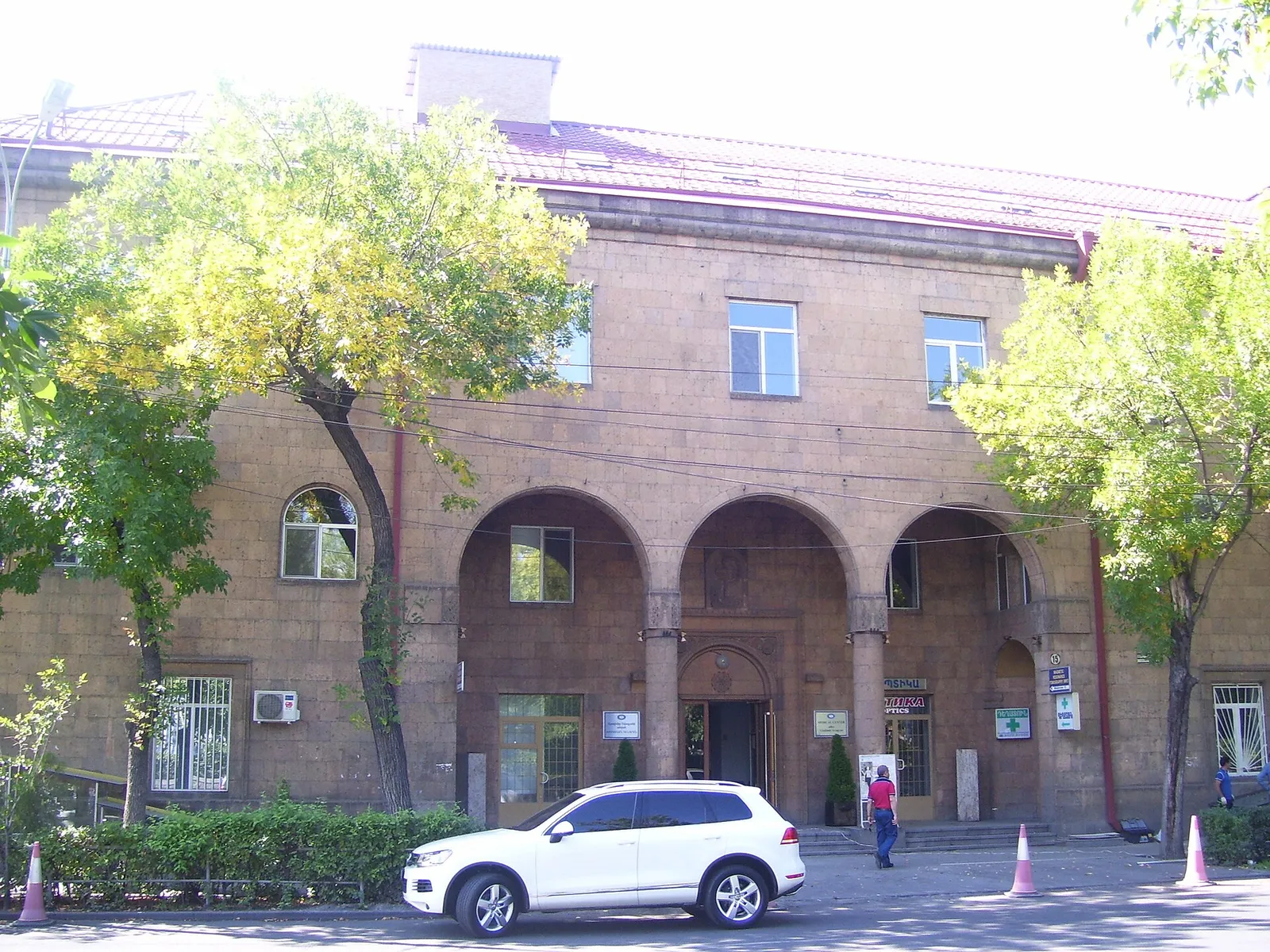
In Armenia, a lot in healthcare depends on one simple formality: you have to be registered with a doctor at a state polyclinic. Without it, a child will not get routine vaccinations, a doctor will not issue a prescription, and a specialist consultation will cost the full price. Below we explain how registration with a doctor works in autumn 2026, what to bring and what free care a foreigner can realistically count on.
This article covers only state primary care: family doctors, therapists and pediatricians at polyclinics.
What changed in 2026
Since 1 January 2026, Armenia has had universal compulsory health insurance. The old "state order" scheme, under which free care was provided for twenty years, has been abolished: the previous decree 318-N lost force on 30 December 2025. If you are reading a guide that mentions it as current, the text describes the system before the reform.
Three documents matter now:
- the Law on Universal Health Insurance of 17 December 2025: who is insured;
- decree 1979-N: what the insured person's package includes;
- decree 1974-N: the minimum scope of care for the uninsured, and its text explicitly says "citizens of Armenia."
The system is administered by the Universal Health Insurance Fund: hotline 8866, Yerevan, 28 Nalbandyan Street. The fund keeps a list of medical institutions it has contracts with, and you need to choose your polyclinic from that list.
The contribution is deducted from salary. The annual amount is AMD 129,600, but at an average salary the state subsidizes most of it, and the employee pays around AMD 300 a month. Coverage is being extended in stages: 2026, 2027 and 2028.
Why sign up even if you use a private clinic
Signing up means registering with a specific primary care doctor: a family doctor (any age), a therapist (from 18) or a pediatrician (under 18). Routine care in Armenia starts with this doctor: your doctor, then a referral, then tests, a specialist or a hospital.
Without registration, four things do not work:
- Vaccinations for your child. They are given only to registered patients. Buying a routine vaccine at a private clinic is practically impossible, because there is almost none on the private market.
- Prescriptions. Since 1 March 2024, prescription drugs have been prescribed electronically only. If your doctor is not in the system, the pharmacy will not dispense anything. A foreign prescription will not help either: it simply does not exist in the Armenian system.
- Referrals. A routine specialist visit or complex diagnostics without a referral are paid in full.
- Hospital care for a child. Free inpatient care requires a doctor's referral, except in emergencies.
Refusing to sign up "because I'll go private anyway" is the most common newcomer mistake. It usually surfaces at the moment a child urgently needs a certificate or a vaccination.
Documents for a foreigner
Official sources disagree here, so the strategy is simple: come with the full set so as not to give a reason for refusal:
- passport;
- resident card (residence permit);
- social number;
- proof of the address where you actually live (for example, a lease);
- for a child, the birth certificate with a notarized translation.
Under Ministry of Health order 48-N, a foreigner needs only an identity document and a document confirming residence status; the social number is not mentioned there. But the card for the same service on the government portal asks for permanent or special status and a social number. The order takes precedence, but arguing with the reception desk by quoting the order is pointless. You will need the social number for banking and work anyway.
Note: in the database a foreigner is given the registration status "temporary," as the order provides.
Which polyclinic you can choose
Your registered address does not limit the choice. What matters is your actual address: you can choose a doctor at any polyclinic in your marz (region). For Yerevan that is the whole city; for Kotayk, only Kotayk.
- If your actual address is not in the polyclinic's marz, you can be lawfully refused.
- You can change doctors no more than four times per calendar year, at the same polyclinic or at another one.
How to proceed:
1. Open the list of contracted institutions on the fund's website (uhif.am) and pick the nearest ones in your marz. 2. Call and ask directly: do they register a foreigner with your status, what to bring, and is there a family doctor or pediatrician who speaks a language you speak. 3. Come with your documents. Registration is free, and a contract is signed on the spot. 4. Ask them to enter your Armenian phone number right away: without it the app will not work later.
When choosing an apartment, keep in mind that the address also determines your polyclinic. If you need a registered lease for your documents, agree on this with the landlord in advance. More on renting in our guide to the lease, deposit and tenant rights.
What is free and what is not
There is no single answer as of autumn 2026. The law on medical care calls primary care free for everyone. The decree on the minimum scope for the uninsured is written only for citizens of Armenia. The government portal says in one place that foreigners pay, and further down that an identity document is enough to register.
In practice, the picture looks like this:
- You work officially in Armenia or have an Armenian sole proprietorship: you are insured, with the same package as citizens, but with co-payments.
- You do not work and live on a residence permit: you can sign up, but whether appointments are free is disputed. Ask about the price in advance.
- A family member of a working person: joining is voluntary and paid.
- A threat to life: ambulance and emergency care are free regardless of status.
- A routine specialist without a referral: full price.
"Free" does not always mean zero at the till: co-payments exist. For example, journalists recorded AMD 6,000 for a gynecologist consultation and AMD 9,000 for a proctologist at one Yerevan clinic, against a full price of AMD 12,000. So there are two rules: ask the price before the appointment and keep the receipt. Since July 2026 there has been a procedure for refunding money that a clinic should not have charged an insured patient: the application goes to the Ministry of Health within a year, and it is not accepted without a receipt.
Children
A foreigner's child is not automatically covered by compulsory insurance, only voluntarily, as a family member of a working parent.
Free inpatient care for under-18s is more complicated: the government service card includes resident children (a resident is someone present for 183 days in a year), while the decrees speak of citizens. A separate Ministry of Health order 34-N of 2022 treats the children of Russian citizens with permanent residence status the same as children of Armenian citizens. Temporary residence permits are not mentioned there.
What parents should do:
- sign the child up right after the move;
- in hospital, ask specifically under which programme and on what basis care is free;
- translate and certify the birth certificate in advance, and bring medical records and the vaccination certificate, preferably printed.
If some vaccinations were given abroad, the pediatrician will draw up a catch-up schedule. Schools, kindergartens and choosing a district for a family are covered in our guide to schools and kindergartens in Yerevan.
Ambulance
Numbers: 103; 911 and 112 also work. The call is free, and the average arrival time in Yerevan is about seven minutes.
When life is at risk, the ambulance is free for any citizen of a CIS country, as set out in a 1997 agreement. Once the condition is stabilized and the person can be transported, further treatment is paid.
New in 2026: insured people are entitled to no more than eight free calls a year. Road accidents, other accidents and emergencies do not count toward the limit, and there is a list of exceptions (poisoning, chest pain, seizures, anaphylaxis and others). The price of a call above the limit is not stated in the decree. The main thing: if life is at risk, call without counting, because the limit concerns only money.
ARMED electronic medical record
ARMED is the state system that shows your registration with a doctor, visits, referrals, tests and prescriptions. There is an ArMed eHealth app in Armenian, Russian and English. The problem is signing in: the official portal requires an Armenian ID card, and instructions for foreigners with a resident card contradict each other. A working approach is to have your phone number entered when you sign up with the doctor and try logging in with it; if that does not work, ARMED support: +374 11 20-20-33.
You can book a doctor without the app as well, through the reception desk or by calling the polyclinic. Keep paper records and receipts just in case: cases of data disappearing from the system are known.
If you go private
Guide prices at private clinics in Yerevan (price lists checked in early October 2026):
- first consultation with a therapist: AMD 7,000-12,000, follow-up: AMD 3,500-6,000;
- complete blood count: about AMD 2,300-2,600;
- MRI of one area: from AMD 50,000;
- CT of one area: from AMD 35,000.
Prices depend heavily on the location, even within one chain. Check in advance and in writing.
Insurance and the residence permit
Health insurance is not required to obtain or renew a residence permit. A travel insurance policy stops being valid once you have a residence permit, and it never covers chronic conditions in the first place. If you do not work, look at private policies from Armenian insurers: the market includes Ingo Armenia, Nairi Insurance, Armenia Insurance, SIL Insurance, RESO, Liga and EFES. Ask directly whether they insure a foreigner with a residence permit and whether chronic conditions are covered.
On residence status itself and the timelines, see our guide to Armenian residency and citizenship. One more detail: resident status in healthcare is tied to 183 days of actual presence within 12 months, and the days are counted automatically from border data.
In short: what to do in the first month
1. Pick 2-3 polyclinics near home from the fund's list. 2. Call and check the requirements for your status. 3. Come with the full set of documents and sign up with a specific doctor. 4. Have your phone number entered in the system. 5. Sort out private insurance separately if you do not work officially.
The full order of the first weeks after moving is in our relocation guide. And if you are still looking for an apartment and want a polyclinic and a school nearby, we will pick options in our bot or through our apartment search service.
_We are not doctors or lawyers: this article describes the procedure under the documents in force in autumn 2026. The rules were updated several times during the year, so check with your polyclinic before any important step._
_Photo: Beko, CC BY-SA 3.0, Wikimedia Commons. Image resized._
Frequently asked questions
Why should a foreigner sign up with a polyclinic in Yerevan? Without registration with a doctor, a child will not get routine vaccinations, a doctor will not issue an electronic prescription, and specialists and complex diagnostics without a referral are paid in full. Even if you use a private clinic, you need to sign up.
What documents does a foreigner need to sign up with a polyclinic in Armenia? Come with the full set: passport, resident card, social number, proof of you
Read also
- Can You Drink Tap Water in Yerevan and the Regions of Armenia?
- Heating a Yerevan apartment in winter: gas, air conditioning and the bills
- A car while you look for an apartment in Yerevan: when you need one and what it costs
- How to Rent an Apartment in Yerevan as a Foreigner (2026)
- Renting in Yerevan for IT Professionals: What to Look For
- Renting an Apartment in Yerevan for 3-6 Months: How and How Much