Freehold or Leasehold in Thailand: What a Foreigner Gets
By WSE.AM editorial team, edited by Mark Muzyka · Updated 7 October 2026
Freehold or leasehold in Thailand: the 49% condo quota, 30-year leases, renewal, inheritance and risks, with examples of projects in Phuket and Samui.
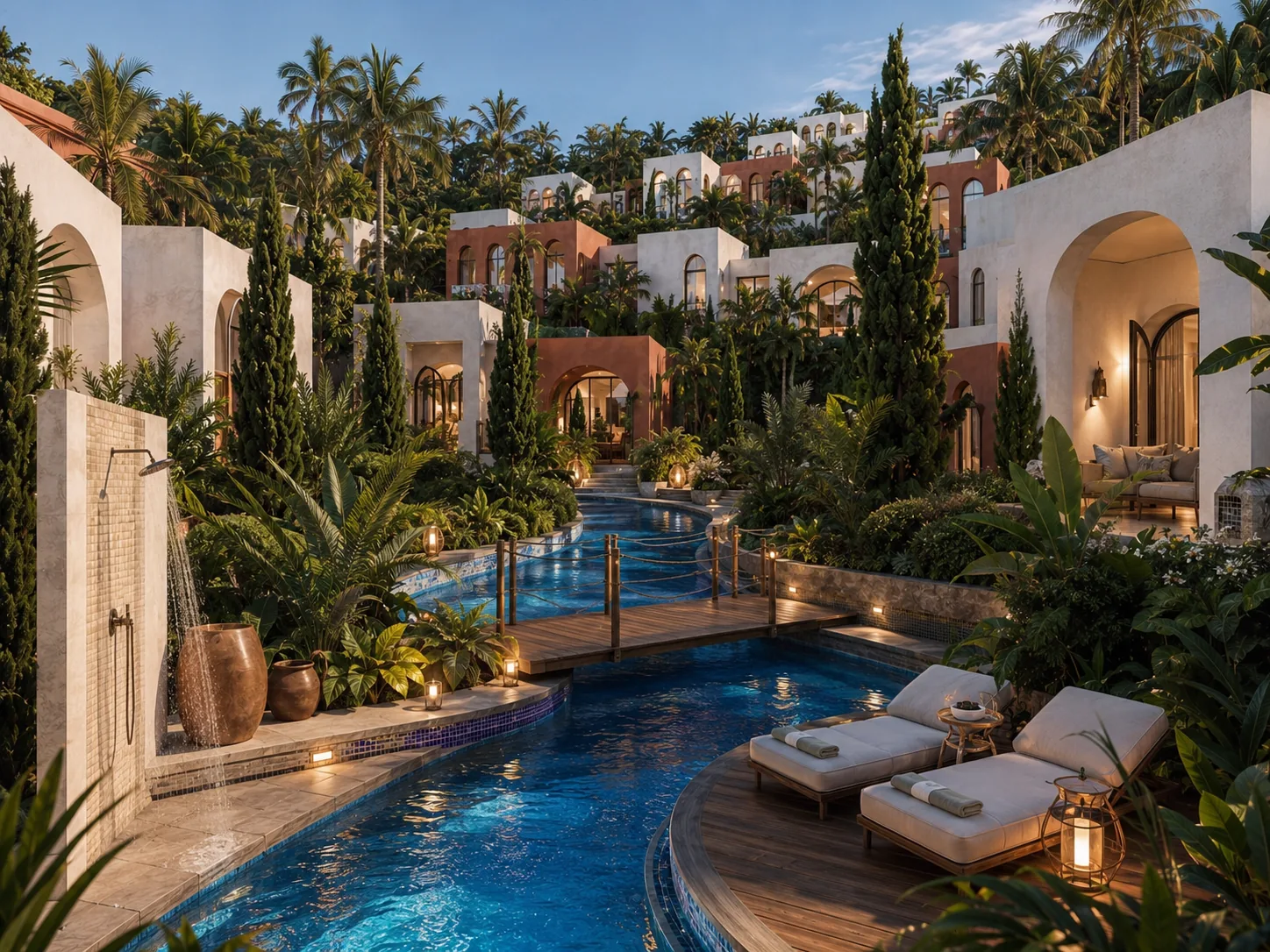
Freehold in Thailand means full ownership of an apartment in a condominium, which a foreigner can get within the building's 49% foreign quota. Leasehold is a registered long-term lease, usually for up to 30 years, with contractual renewal terms; this is how villas are sold, because a foreigner usually cannot own land directly. In Phuket, condominium apartments are more often bought freehold, while the villas on Samui in our catalog (CASA BLANCA, CASA NOI, SOHO Residence) are sold as leasehold for 30 years.
In short:
- Freehold is available to a foreigner for a condominium apartment as long as the 49% floor area quota is not used up.
- Leasehold is a lease of up to 30 years registered at the Land Department; renewal is written into the contract.
- Renewing a leasehold depends on the contract and on the good faith of the lessor, so it is not the same as ownership.
- For freehold, the money must come from abroad with a bank confirmation.
- According to the developer of Sea Heaven, registration costs 2% for freehold and 1.1% for leasehold.
- Schemes with nominee Thai shareholders are illegal and risky.
What is freehold in Thailand?
Freehold is full ownership. For a foreigner it is realistic in one main case: an apartment in a registered condominium. The law allows foreigners to own no more than 49% of a condominium's saleable area. As long as the quota is not used up, a foreign buyer registers the apartment in their own name and receives a title deed for the unit.
What this means in practice:
- the apartment is yours with no time limit;
- you can sell it, give it away or leave it as an inheritance;
- your ownership does not depend on a Thai party;
- when you sell to another foreigner, the apartment stays within the foreign quota.
A condition for freehold that is often overlooked: the money for the purchase must be brought into Thailand from abroad in foreign currency, and the bank must issue a confirmation.
What is leasehold and how long does it last?
Leasehold is a long-term lease. As a rule, it can be registered at the Land Department for a term of up to 30 years. Contracts often use the formula "30+30" or "30+30+30": the first 30 years are registered, and the renewals remain the lessor's contractual obligation. This is an important distinction: registration protects the first term, while renewal depends on how the contract is drafted and who will own the land in 30 years.
A long-term lease must be registered. An unregistered contract, as a rule, does not protect the tenant for the full term, even if it says 30 years on paper.
Leasehold is usually used in three situations:
- villas and houses, where a foreigner cannot own the land;
- condominium apartments when the foreign quota has already been used up;
- projects where the developer sells this way from the outset.
What does this look like in real projects?
On Samui, all three villa projects in the catalog are sold as leasehold. At CASA BLANCA Residences (in Russian), the developer lists a 30-year leasehold with renewal and plots of 100-190 m², and covers the first two years of the land lease itself. At CASA NOI (in Russian), it is a 30-year leasehold with renewal, the land is held by a Thai company under a contract, and the annual land lease payment, according to the developer, is about 70,000 baht. SOHO Residence is also a 30-year leasehold with the right of renewal and annual payments.
In Phuket the situation is different: almost the entire catalog consists of condominiums, where a foreigner can count on freehold within the quota. At VIP Tropika in Bang Tao, the key facts state the format directly as "Freehold / Leasehold": apartments within the quota are registered as ownership, and above the quota a lease is possible.
Which to choose: freehold or leasehold?
If you are buying an apartment in Phuket and quota is available, freehold is almost always preferable. Ownership is easier to sell, easier to leave to your heirs, and its value does not shrink with every year of the lease that passes.
Leasehold makes sense when you specifically want a house with a plot, or when the apartment you like is already outside the quota and the price compensates for it. Before buying leasehold, check:
- whether the first lease term is registered at the Land Department;
- how renewal is worded and what happens if the land changes owner;
- whether the contract passes to heirs and whether it can be assigned to a buyer;
- what annual land payments fall on you;
- who owns the land and whether it is mortgaged.
How do freehold and leasehold affect resale?
A foreign buyer will buy a freehold apartment if the condominium still has foreign quota, and in a sale from one foreigner to another the quota usually just passes on. With leasehold, the buyer gets the remainder of the term, and the fewer years are left, the more cautious they will be. That is why for an investment apartment meant for resale, freehold is usually more liquid. For more on the market and completion dates, see Phuket new build prices in 2026.
How much does it cost to register freehold and leasehold?
When ownership is registered, a transfer fee of 2% of the appraised value is usually paid, and the split between seller and buyer is set in the contract. In the description of the Sea Heaven Naithon project, the developer gives a guide figure: freehold registration 2%, leasehold 1.1%. Other payments (specific business tax of 3.3% or stamp duty of 0.5%) usually fall on the seller.
Frequently asked questions
Can a foreigner buy a villa in Thailand as freehold? As a rule, no: a foreigner cannot own land directly. Villas are bought as leasehold for 30 years with contractual renewal, and in some structures the building itself can be registered separately.
Is renewal of a leasehold for the next 30 years guaranteed? No, renewal is usually a contractual obligation, not a registered right. How reliable it is depends on the wording of the contract, so it is worth having it checked by an independent Thai lawyer.
Can a leasehold be converted to freehold later? If the apartment is in a condominium and foreign quota later becomes available, this is sometimes possible by agreement with the owner. There are no guarantees, and the terms are agreed separately.
Can a leasehold be inherited? That depends on the lease contract. A proper contract explicitly describes the transfer of rights to heirs and assignment to a buyer; without this clause, buying is risky.
Do I need proof of the money transfer for leasehold? The requirements for leasehold are softer than for freehold, but you should still keep the bank transfer documents. They will be useful on resale and when taking money out of the country.
You can choose an apartment and check availability in the Phuket new builds catalog (in Russian), or message us on Telegram at @WSEManager.
All articles · Property catalog · Contact